The Engineering Reality: Can the 3500/22M TDI Module Be Hot-Swapped?
The 3500/22M Transient Data Interface (TDI) module functions as the vital communication gateway for the Bently Nevada 3500 machinery protection system. It manages data acquisition, system configuration, and high-level software integration. However, when this critical component fails, engineers often face a dilemma: can they replace it while the system is live?
Understanding the Critical Role of the Rack Interface Controller
The 3500/22M TDI is far more than a simple communication card. It serves as the primary bridge between the rack backplane and external host systems like System 1. Removing this module immediately severs all data flow to the software layer. Consequently, operators lose real-time visibility into vibration trends and alarm events, even if the individual monitoring modules continue to function locally.
The Risk Factor: Hot-Swap Capability vs. System Stability
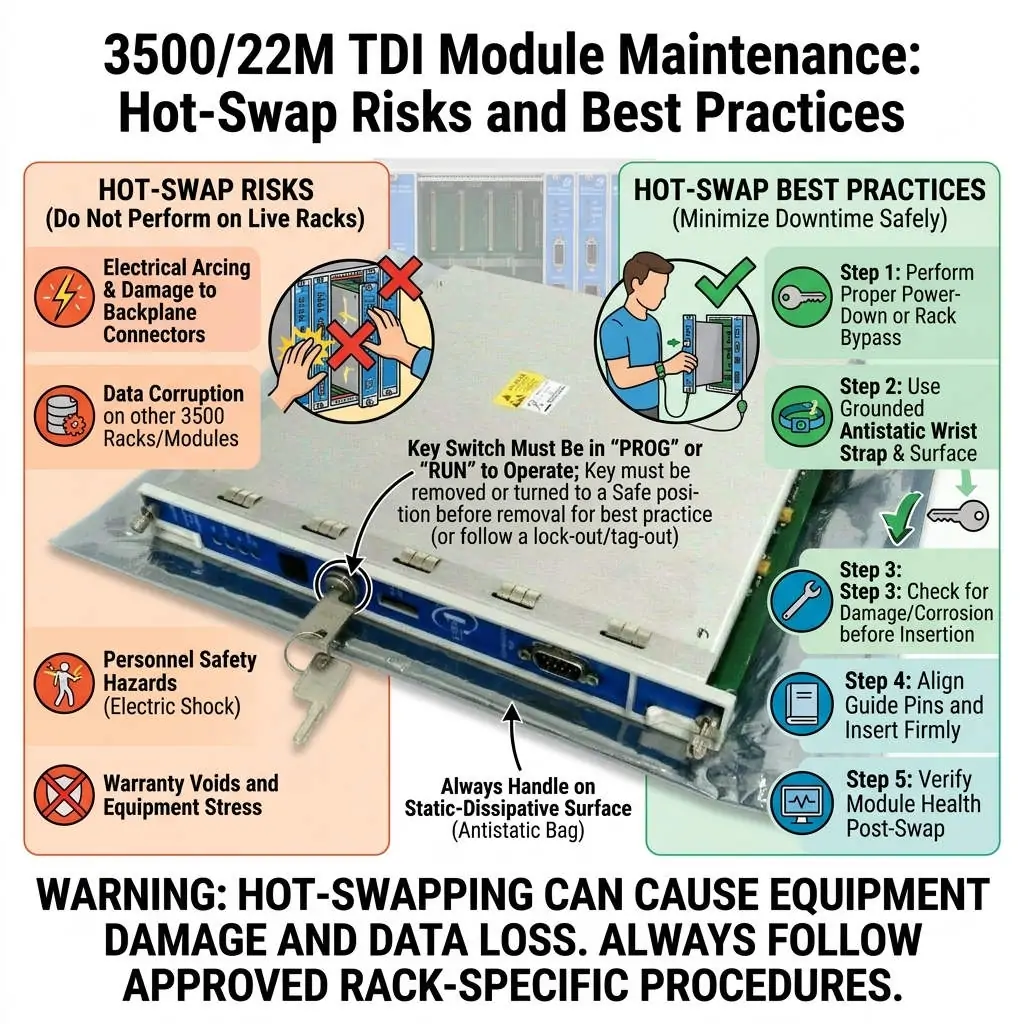
While many I/O modules in modern DCS or PLC systems support hot-swapping, the TDI requires extreme caution. Technically, the 3500 platform allows for live removal, but the TDI manages the internal communication bus logic. Pulling this module during active operation can trigger watchdog resets or bus instability. As a result, the entire rack may experience temporary communication faults that jeopardize equipment oversight.
Physical Impact on Backplane and Power Distribution
The TDI interacts directly with the system backplane and power management circuits. Inserting or removing a module under a live electrical load can create transient voltage spikes or minor connector arcing. Over time, these disturbances degrade the physical integrity of the backplane. This risk increases significantly in harsh industrial environments with high humidity or corrosive atmospheres.
Troubleshooting a “Frozen” 3500/22M TDI in the Field
In many field cases, an unresponsive TDI stems from firmware lockups, network storms, or EMI issues rather than total hardware failure. Before attempting a physical swap, we recommend trying a remote reboot through the configuration software. If the module remains unresponsive, perform a controlled rack power cycle during a safe window to restore logic without risking connector damage.
Emergency Protocols for Live Replacement
If a plant cannot afford a shutdown and a swap is unavoidable, strict safety measures are essential. First, activate redundant monitoring or secondary protection systems to cover the “blind spot.” Second, use proper ESD grounding and apply steady, even force during insertion. This approach minimizes the duration of visibility loss and protects the delicate backplane pins from mechanical stress.
Maximizing Longevity through Grounding and Protection
Many hardware “failures” are actually symptoms of poor installation. Ensure the rack has a robust single-point ground to prevent common-mode noise. Additionally, keep Ethernet data lines isolated from high-power motor cables. Using industrial-grade surge protection can further safeguard the TDI from external electrical surges, which is a leading cause of communication interface burnout.
Technical Maintenance Checklist
- ✅ Pre-Swap Audit: Verify the firmware version of the replacement 3500/22M matches the existing rack configuration.
- ⚙️ Risk Mitigation: Inform the control room that all remote data logging will cease during the replacement procedure.
- 🔧 Hardware Protection: Always wear an ESD wrist strap and inspect backplane connectors for dust or corrosion.
- 📊 Post-Install Check: Confirm all “System 1” tags resume data collection immediately after the new module initializes.
PLC Pioneer’s Expert Commentary
“In my years of managing industrial control assets, I have observed that while the 3500/22M is rugged, it remains the ‘nervous system’ of your rack. Treating it as a simple plug-and-play component often leads to unnecessary headaches. For critical power gen or petrochemical assets, the best practice remains scheduling TDI maintenance during planned downtime. Never compromise long-term system reliability for a quick fix unless the situation is truly dire.” — PLC Pioneer
Frequently Asked Questions
Q: Will removing the TDI cause the machinery to trip?
Usually, no. The 3500 monitoring modules (like the 3500/42M) handle the actual relay logic for machine protection. However, removing the TDI removes the operator’s ability to see why a trip might be occurring, creating a high-risk operating window.
Q: Are there specific firmware versions that are safer for hot-swapping?
Newer firmware revisions have improved bus stability, but no version officially promotes the TDI as a ‘zero-risk’ hot-swap module. Always check the Bently Nevada compatibility matrix for your specific rack revision before proceeding.
Q: What is the most common cause of TDI communication failure?
Network packet collisions and improper shielding are frequent culprits. If your TDI “freezes” repeatedly, it is often a sign of high network traffic or EMI rather than a physical defect in the 3500/22M hardware itself.
Practical Solution Scenario: The Petrochemical Plant Case
A petrochemical facility recently experienced a TDI freeze on a critical turbine rack. By utilizing a controlled maintenance window and following a strict ESD protocol, the engineering team successfully restored visibility. However, they discovered that the root cause was a lack of surge protection on the external communication line. Adding an industrial isolator prevented future freezes and extended the module’s service life.
If you require expert technical support or high-quality replacement modules for your machinery protection systems, we are here to help. Our team specializes in providing reliable hardware solutions that keep your plant running safely.
Explore our full range of technical guides and industrial components at: PLC Pioneer Limited