Understanding Why DCS Configuration Software Remains Closed-Source and Hardware-Bound
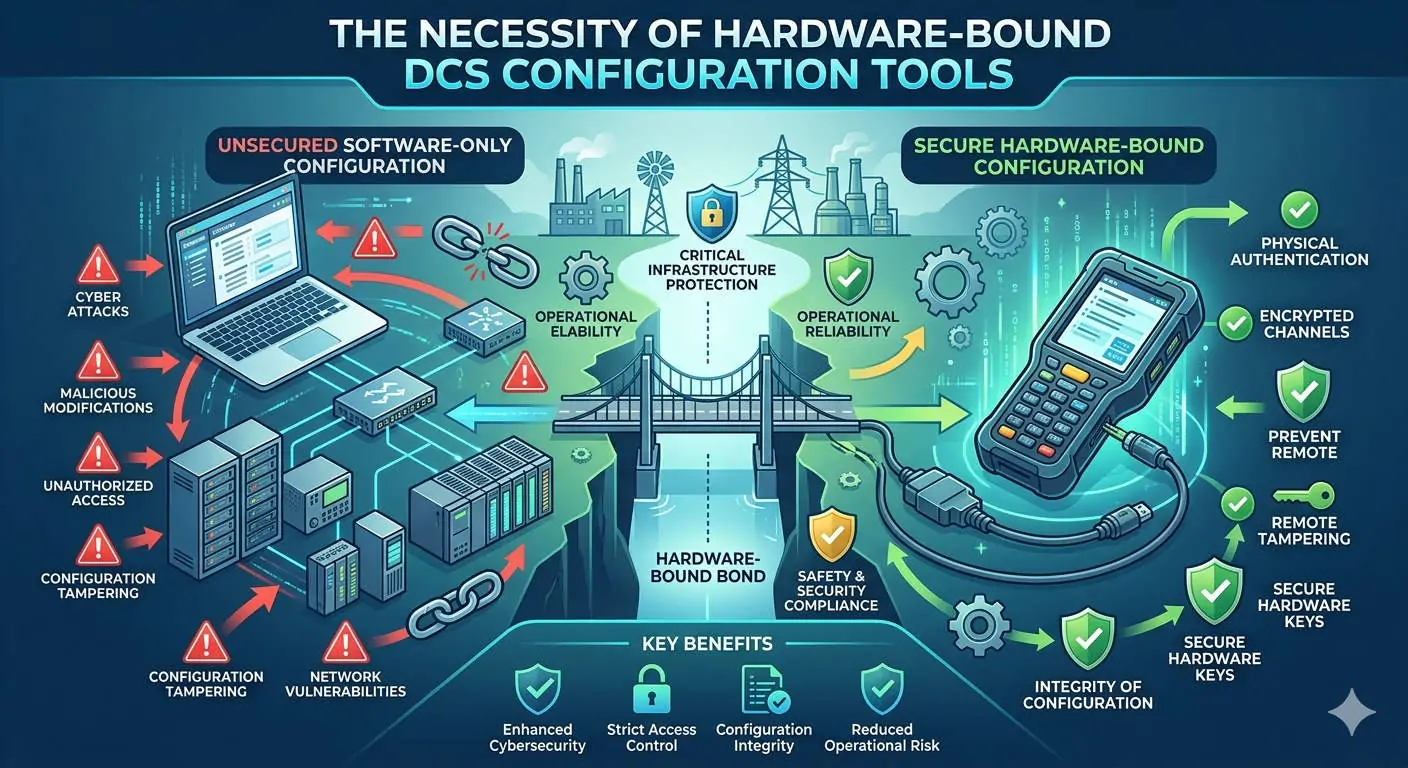
In the world of industrial automation, Distributed Control Systems (DCS) serve as the backbone for complex, continuous processes. Unlike generic IT platforms, DCS configuration software is almost always proprietary and tightly coupled with specific hardware. This integration is not a market restriction but a fundamental necessity to guarantee deterministic control and long-term system integrity. In mission-critical sectors like petrochemicals and power generation, even the slightest software-firmware mismatch can trigger catastrophic process instability.
The Critical Role of Deterministic Execution and Scan Cycle Integrity
DCS platforms operate within highly controlled execution environments where timing is everything. Configuration software must precisely align with the controller’s hardware task scheduling. In a refinery, for example, maintaining loop stability depends on microsecond-level predictability. Jitter or delays in scan cycles can lead to dangerous PID oscillations. Consequently, vendors utilize closed-source environments to prevent unauthorized modifications that might disrupt real-time memory allocation or scheduling.
Optimizing Protocol Stacks for High-Volume Data Consistency
Modern control systems manage thousands of I/O points simultaneously. To achieve this, vendors develop highly optimized, proprietary communication drivers. These drivers reduce latency and ensure superior data consistency across the network. While standards like Modbus or OPC UA offer interoperability, they often lack the deep integration found in native vendor protocols. Therefore, relying on vendor-approved software ensures that I/O modules and controllers communicate at peak efficiency without undocumented bottlenecks.
Safety Certifications and Compliance with International Standards
Regulatory compliance is non-negotiable in the pharmaceutical and oil and gas industries. DCS platforms must meet rigorous safety standards such as IEC 61508 and IEC 61511. These certifications apply to the entire system stack—hardware, firmware, and software combined. Any shift toward open-source tools would immediately invalidate these safety validations. As a result, maintaining a closed ecosystem is the only way for vendors to guarantee that the system remains within certified safety limits throughout its lifecycle.
Field Maintenance: Version Management and Project Commissioning
Practical experience shows that software-firmware inconsistencies are a leading cause of commissioning delays. Engineers must lock the configuration software version once the Factory Acceptance Test (FAT) concludes. Upgrading engineering tools mid-project often introduces unforeseen risks. For instance, a minor patch might cause inconsistent function block behavior between redundant controllers. Therefore, always validate the entire system stack before implementing any software updates in a live environment.
Best Practices for Hardware Binding and Cybersecurity
Most industrial software licenses are tied to specific hardware IDs or security dongles. This ensures that only authorized stations can modify the control logic. To maintain uptime, keep detailed records of hardware serial numbers and backup all license files. Furthermore, since the software is closed-source, users must rely on vendor-provided security patches. In addition, implementing an industrial DMZ and network segmentation is far more effective than installing uncertified third-party antivirus tools on DCS nodes.
Expert Commentary by PLC Pioneer
“In my decade of field experience, I’ve seen that the ‘locked’ nature of a DCS is actually its greatest strength. While IT professionals often push for open-source flexibility, industrial environments prioritize ‘the known.’ A closed system provides a clear trail of accountability and a predictable response to failures. In the 10 to 20-year lifecycle of a plant, the reliability of a hardware-bound system far outweighs the temporary convenience of open software.” — PLC Pioneer
Industrial Automation FAQ
Q1: Why can’t we use third-party tools to program a DCS?
Third-party tools cannot guarantee the real-time determinism required for complex processes. Without the vendor’s proprietary hardware mapping, you risk protocol incompatibility and the loss of safety certifications, which could lead to legal and operational liabilities.
Q2: How should I handle software upgrades for legacy hardware?
Always request a compatibility matrix. Legacy controllers often have memory limits that cannot handle newer software features. In many cases, a firmware flash is required, and redundancy behavior must be re-verified to prevent unexpected switchovers.
Q3: Does hardware binding affect disaster recovery?
It can if not managed properly. Because licenses are tied to IDs, a hardware failure requires a license transfer. Always maintain a “Hot Standby” engineering station or a pre-authorized replacement dongle to minimize downtime during a hardware swap.
Technical Implementation Checklist
- ✅ Verify Firmware Compatibility: Check the vendor’s matrix before every minor software patch.
- ⚙️ Implement Network DMZ: Protect the DCS core from external threats without interfering with real-time traffic.
- 🔧 Archive Configuration Files: Save multiple versions of project logic at every major commissioning milestone.
- 🔒 Safety Validation: Ensure all logic changes are documented and comply with site-specific safety SIL ratings.
Application Scenario: Chemical Reactor Control
In a high-pressure chemical reactor, the cooling system’s PID loop must respond within a 100ms window. By using vendor-integrated configuration software, engineers ensure the control logic executes exactly as simulated during the design phase. This tight coupling prevents “logic drift,” where software instructions and hardware execution timing fall out of sync, ensuring the reactor remains within its safe operating envelope at all times.
Maximizing the reliability of your control system requires the right combination of high-quality hardware and certified configuration tools. For expert support and the latest in industrial automation components, explore our comprehensive solutions.
Visit our official site for technical support and premium parts: PLC Pioneer Limited