
How Low-Code Development Revolutionizes Control Systems in Modern Industrial Automation
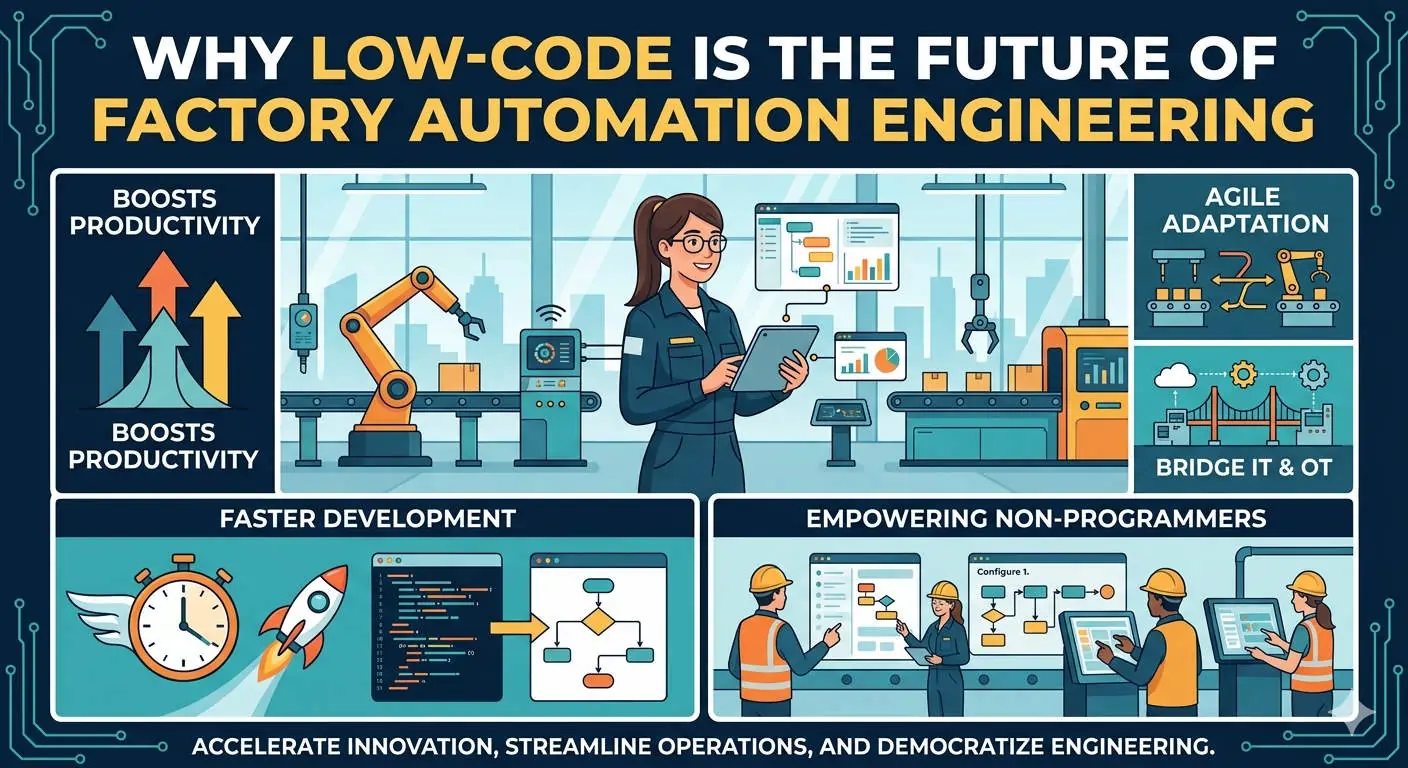
The rapid evolution of factory automation faces two major hurdles: increasing logic complexity and a dwindling pool of specialized programmers. Low-code development directly addresses these challenges by simplifying the configuration of control systems. This shift empowers process engineers and maintenance teams to manage system optimization without deep coding expertise. Consequently, industries like oil and gas or pharmaceuticals can adapt to process changes more efficiently than ever before.
Accelerating Engineering Cycles Through Visual Configuration
Low-code environments utilize graphical function blocks and pre-validated templates to streamline the design process. Traditional coding often requires days of manual entry for even minor adjustments. In contrast, visual platforms reduce this response time to mere hours. For batch production environments, this speed is vital to minimizing downtime during frequent product changeovers. Faster iterations lead to a more agile production line and higher overall equipment effectiveness.
Simplifying Integration with Protocol Abstraction Modules
Modern automation demands seamless communication between heterogeneous devices across the plant floor. Low-code platforms abstract complex protocols like Modbus, OPC UA, and EtherNet/IP into reusable, drag-and-drop modules. This abstraction layer significantly lowers the risk of integration errors during the commissioning phase. Based on field experience at PLC Pioneer, improper protocol handling causes most project delays. Using standardized modules ensures consistent data exchange and more robust system architecture.
Enhancing System Robustness with Built-In Validation
Reliability remains the top priority for any Distributed Control System (DCS) or PLC network. Low-code platforms integrate automated diagnostics and logic conflict detection to prevent human-induced coding errors. These validation mechanisms catch potential faults before they reach the runtime environment. As a result, high-availability systems enjoy longer uptime and fewer emergency maintenance interventions. This proactive approach to error handling creates a safer and more predictable industrial environment.
Crucial Commissioning: Aligning Logic with Physical Reality
While pre-built templates accelerate deployment, they are often generic. Engineers must meticulously verify all interlocks and control sequences against the physical process during commissioning. I once witnessed a refinery project where a generic pump template caused a critical start delay due to mismatched permissive logic. Therefore, always treat “standard” templates as a starting point rather than a final, plug-and-play solution.
Maintaining Signal Integrity in High-Noise Environments
Sophisticated software cannot compensate for poor hardware installation. In environments with large motors or Variable Frequency Drives (VFDs), electromagnetic interference (EMI) remains a constant threat. Improper shielding or grounding can trigger false signals that the low-code layer may misinterpret as legitimate data. To maintain system accuracy, use high-quality shielded cables and implement a strict single-point grounding strategy. This hardware-first mindset prevents intermittent software faults that are notoriously difficult to troubleshoot.
Implementing Strict Change Management and Version Control
The ease of making changes in a low-code environment creates a significant risk for uncontrolled modifications. Unauthorized logic updates can lead to safety hazards or non-compliance in regulated sectors like the pharmaceutical industry. We recommend following established standards such as ISA-88 or IEC 61511 for lifecycle management. Always document every logic change and maintain a clear version history. This discipline ensures that any modification remains traceable, reversible, and fully compliant with industry safety audits.
Strategic Technical Checklist
- ✅ Verify Template Logic: Cross-reference all pre-built function blocks with P&IDs before the final site acceptance test (SAT).
- ⚙️ Abstract Wisely: Use protocol modules to standardize data flow across Allen-Bradley, Siemens, and Honeywell hardware.
- 🔧 Hardware Audit: Confirm that all industrial PCs and controllers meet the environmental specifications for heat and vibration.
- 📊 Documentation: Maintain a live log of all logic adjustments to ensure the “as-built” software matches the actual operation.
PLC Pioneer’s Industry Perspective
“Low-code is not a replacement for engineering expertise; rather, it is a tool for reallocating intellectual capital. By removing the burden of repetitive syntax and manual coding, we allow our most experienced engineers to focus on high-value process optimization. In my view, the future of industrial automation lies in this ‘democratization’ of control logic, provided we maintain the rigorous safety standards that our industry demands.” — PLC Pioneer
Frequently Asked Questions
Q: How do I know if my legacy DCS can support a low-code upgrade?
You must evaluate the communication capabilities of your existing controller hardware. If your legacy system lacks modern Ethernet ports or OPC UA support, you may need a protocol gateway or middleware to bridge the gap between old hardware and new software layers.
Q: Does low-code affect the execution speed of critical safety loops?
Generally, no. Most modern platforms compile graphical logic into machine code that runs at native speeds. However, for ultra-high-speed applications under 10ms, you should perform a benchmark test to ensure the abstraction layer doesn’t introduce unacceptable jitter.
Q: What is the biggest hurdle when transitioning a team to low-code tools?
The challenge is usually cultural rather than technical. Experienced programmers may feel restricted by templates, while process engineers may feel overwhelmed by the new responsibility. Comprehensive training on version control and change management is the key to a successful transition.
Solution Scenario: Rapid Batch Changeover
A chemical plant recently integrated a low-code DCS layer to manage its specialized batch reactors. By using pre-validated “Recipe” modules, they reduced the time required to switch production lines from twelve hours down to two. This transition allowed the plant to accept smaller, more diverse orders while maintaining strict compliance with safety interlocks, proving that software agility translates directly into commercial competitiveness.
If you need to optimize your industrial control architecture or source reliable hardware for your next automation project, we invite you to consult our technical experts.
Explore our full range of automation solutions and technical resources: PLC Pioneer Limited