
Hot-Swapping the AAI141-S50: Is an FCS Shutdown Necessary?
From a technical standpoint, adding a Yokogawa AAI141-S50 analog input module does not require a system reboot. Most modern industrial automation architectures, including CENTUM VP and CS 3000, support this operation while the Field Control Station (FCS) remains active. However, “no shutdown required” does not automatically mean “zero risk” for the plant operator.
Understanding Online Insertion and Removal (OIR) Capabilities
The AAI141-S50 module features Online Insertion and Removal (OIR) technology. This capability allows technicians to install the hardware while the FCS backplane is powered. Consequently, maintenance teams can expand system I/O without halting continuous production processes in oil, gas, or chemical facilities. Maintenance schedules become more flexible because the controller continues to execute logic for other nodes.
PLC Pioneer Comment: While the FCS stays online, the specific slot will register a momentary status change. Operators must realize that any control loops mapped to the new or replaced module will experience a “BAD” signal status during the transition. Therefore, pre-configuring the control strategy is vital for safety.

The Importance of Channel Isolation in DCS Reliability
Reliability in factory automation depends heavily on signal integrity. The AAI141-S50 offers individual channel isolation for its 16 analog inputs. This design prevents ground loops and minimizes noise interference between different field transmitters. Furthermore, isolation acts as a barrier, protecting the expensive FCS processor from external electrical faults or wiring errors in the field.
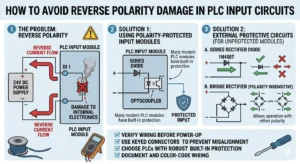
Technicians often encounter “controller hunting” when signal noise is high. Because the AAI141-S50 provides stable 4–20 mA acquisition, it improves the overall precision of the PID control loops. Nevertheless, isolation is not a substitute for correct wiring. Reversed polarity remains a leading cause of module failure during initial commissioning.
Verification of System Compatibility and Hardware Requirements
Compatibility is the most common hurdle when adding new modules to legacy control systems. The AAI141-S50 is generally compatible with standard Yokogawa base units. However, users must verify the specific FCS generation and firmware revision. Some older CS 3000 systems may require a software update or a specific configuration patch to recognize the “-S” series hardware correctly.
Before installation, always check the “Support Matrix” provided in the Yokogawa technical documentation. Adding a module to an unsupported base unit can cause unexpected bus errors. In the worst-case scenario, this might lead to an unintended FCS dual-redundancy switchover or a complete CPU stall.
Technical Best Practices for Module Installation
Based on extensive field experience, following a standardized checklist ensures a seamless integration process. Implementing these steps reduces human error and protects the industrial automation environment:
- ✅ Loop Preparation: Switch all related control loops to MANUAL or OUT OF SERVICE mode before insertion.
- ⚙️ Configuration Check: Ensure the I/O environment in the Engineering Station matches the physical slot location.
- 🔧 Physical Security: Use proper torque for terminal screws to prevent loose connections in high-vibration areas.
- ✅ Environmental Protection: Confirm that the cabinet cooling system is functional to handle the additional heat load.
Expert Insight by PLC Pioneer
After 15 years of working with DCS hardware, I have observed that most “online replacement” failures are human-centric. Engineers often focus solely on the hardware and ignore the logic side. If you treat module addition as a high-level engineering task rather than a simple mechanical plug-in, the risk is negligible. The AAI141-S50 is a robust tool, but it requires a disciplined approach to field wiring and loop isolation.
Real-World Application Scenario: Chemical Batch Processing
In a recent upgrade for a chemical plant, the facility needed to add four new temperature transmitters to an active batch reactor. By using the AAI141-S50, the team avoided a 12-hour production shutdown. They bypassed the safety interlocks temporarily, inserted the module, and verified the signals one by one. The total process took two hours with zero impact on the ongoing batch, proving the economic value of OIR-capable hardware.
Frequently Asked Questions (FAQ)
Q1: What happens if I insert the AAI141-S50 into the wrong slot?
If the slot is not configured in the system software, the FCS will usually ignore the module or trigger a “Configuration Mismatch” alarm. However, if the slot was previously assigned to a different module type, it could cause a diagnostic error. Always verify your I/O mapping before physical installation.
Q2: Can the AAI141-S50 handle 2-wire and 4-wire transmitters simultaneously?
The module is designed for 4–20 mA signals, but how you wire it depends on the external power supply configuration. While the module provides isolation, mixing different power sources on the same module requires careful attention to the common return path to avoid signal offset.
Q3: Does the AAI141-S50 require external surge protection?
Yes. While the module has internal protection against minor spikes, it is not designed to withstand direct lightning strikes or massive industrial surges. For outdoor field wiring, always install external surge arresters to protect your long-term investment.
For more technical guides and high-quality automation components, visit PLC Pioneer Limited to explore our extensive inventory and expert support services.