Risks of Online PLC Program Modifications in Industrial Automation
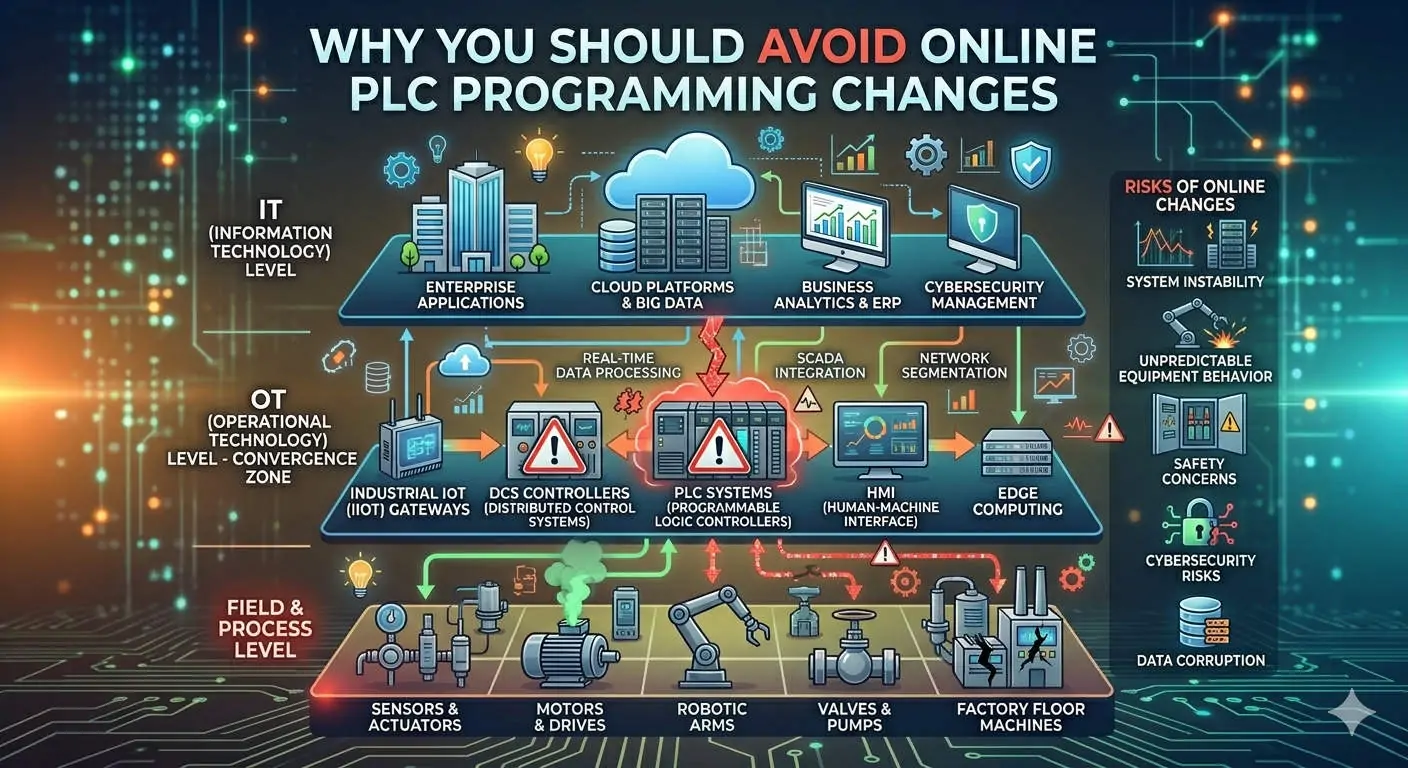
Modifying a running PLC program poses significant risks to process stability and personnel safety. In high-stakes industries like oil, gas, and chemical processing, a single logic error can trigger catastrophic shutdowns. Therefore, maintaining a controlled environment for program updates is essential for operational integrity. A disciplined approach ensures deterministic behavior and protects expensive factory automation assets.
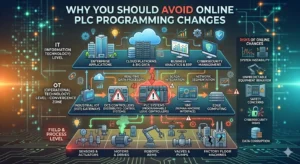
Scan Cycle Disruptions and Logic Inconsistency
PLC systems operate through deterministic scan cycles to execute control logic. Online edits can momentarily interrupt this sequence, creating race conditions or incomplete executions. In precise applications like pharmaceutical batching, even a millisecond of lag can alter material ratios. Consequently, these inconsistencies lead to rejected batches or dangerous process deviations.
Memory Fragmentation in Control Systems
Live program updates often force the controller to reallocate memory dynamically. Over time, frequent changes cause memory fragmentation, particularly in legacy DCS or older CPU architectures. This fragmentation reduces execution efficiency and may trigger unexpected controller faults during peak loads. As a result, the system loses the reliability required for continuous 24/7 operations.
The Danger of Unsynchronized I/O States
During an online modification, the PLC might lose synchronization with field instruments and actuators. Outputs may stay locked in their last known state while the CPU processes new logic. In a refinery setting, a valve remaining open during a logic transition could cause a pressure surge. Maintaining I/O integrity is vital to preventing equipment damage and environmental incidents.
Best Practices for Industrial Change Management
- ✅ Validate via Offline Simulation: Use virtual controllers like Honeywell’s simulation tools to test logic before deployment.
- ⚙️ Follow IEC 61511 Standards: Implement a formal Management of Change (MOC) process to document every modification.
- 🔧 Utilize Redundant Architectures: Switch control to a standby unit before applying updates to the primary controller.
- 📋 Schedule Planned Downtime: Perform complex logic overhauls during maintenance windows to minimize production risks.
PLC Pioneer Expert Insight: The Human Factor
In my years of field experience, hardware failures rarely cause the most expensive industrial accidents. Instead, uncontrolled “quick fixes” during active operations usually lead to systemic failure. While modern control systems offer “Online Edit” features, I recommend treating them as a last resort. Professional engineers prioritize predictable outcomes over convenient, high-risk adjustments. — PLC Pioneer
Buyer’s Guide for System Upgrades
Is Online Editing Truly Risk-Free in Modern PLCs?
No system is entirely risk-free. Modern platforms offer better protection, but logic errors still occur. Always verify vendor specifications and perform rigorous risk assessments before attempting live changes.
Should Legacy Systems be Replaced for Better Change Management?
Upgrading hardware helps, but it does not replace the need for strict engineering protocols. Focus on establishing a validated offline workflow. This approach often provides better reliability than simply buying newer hardware for online capabilities.
Frequently Asked Questions (FAQ)
Q: What is the most common sign of memory fragmentation in an older PLC?
You will often notice a gradual increase in the scan time. If the watchdog timer trips unexpectedly after several online edits, fragmentation is a likely culprit.
Q: How do I handle emergency logic changes during a continuous process?
Force the specific I/O points manually if the hardware allows, or use a bypass switch. This maintains safety while you prepare a proper, documented offline update for the next available window.
Q: Does the IEC 62443 standard impact how we perform program edits?
Yes, cybersecurity standards require authorized access and audit trails for every change. Online edits often bypass some security layers, making the system more vulnerable to unauthorized tampering.
Solution Scenario: Chemical Reactor Safety
In a chemical reactor cooling loop, an engineer attempted to adjust a PID constant online. The momentary logic pause caused the cooling pump to stall for two seconds. This led to a temperature spike that triggered an emergency flare. By utilizing a staging environment first, the team could have identified the timing conflict without risking the facility.
For more technical insights and high-quality automation hardware, explore our extensive catalog of industrial solutions. We provide the components you need to keep your facility running safely and efficiently.
Visit our official site for technical support and hardware: PLC Pioneer Limited