Optimizing IP Ratings for Industrial Automation in Corrosive and High-Dust Environments
In demanding sectors like chemical processing, cement production, and offshore oil facilities, hardware protection is a primary operational concern. Selecting an incorrect Ingress Protection (IP) rating often leads to premature equipment failure and costly unplanned downtime. High-performance PLC, DCS, and SCADA devices require robust enclosures to block fine particulates and corrosive agents effectively.
Understanding the IEC 60529 Standard for Industrial Protection
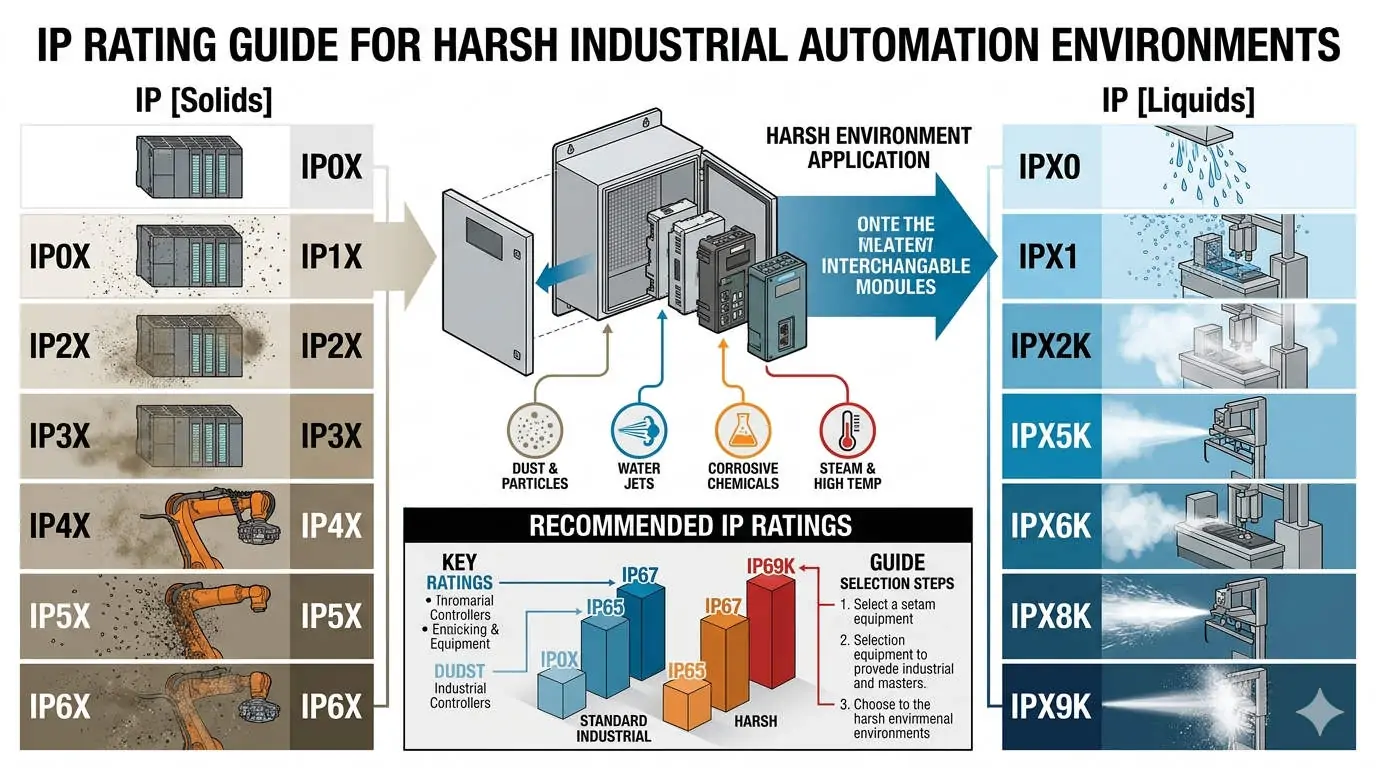
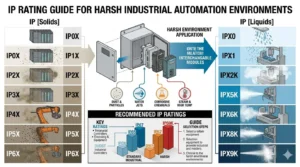
The IP rating system, defined by the IEC 60529 standard, uses a two-digit code to classify protection levels. The first digit (0–6) measures resistance against solid particles, while the second digit (0–9K) focuses on liquid ingress. For high-dust environments such as cement plants, IP6X is essential because even minor dust penetration can lead to I/O module overheating or contact oxidation over time.
Material Science: Beyond the IP Rating Number
While an IP rating confirms a seal’s integrity, it does not guarantee chemical compatibility. PLC Pioneer observes that enclosure materials must align with specific chemical exposure profiles. For instance, standard powder-coated steel often degrades within a year near acid dosing systems. In contrast, 316L Stainless Steel typically provides a service life exceeding five years in high-chloride or acidic atmospheres.
Managing Internal Condensation and Pressure Dynamics
High IP-rated enclosures often suffer from internal moisture buildup due to temperature fluctuations. This phenomenon creates a vacuum effect that stresses gaskets and draws in humid air. Therefore, engineers should integrate breathable membranes or Gore vents into outdoor PLC panels. These components allow pressure equalization while maintaining the enclosure’s environmental seal, preventing hidden corrosion on internal circuitry.
Critical Installation Focus: The Vulnerability of Cable Entries
Field data suggests that 70% of enclosure failures stem from improper cable management rather than the cabinet itself. Even an IP66-rated cabinet will fail if the cable glands are mismatched or under-torqued. Always use certified IP68 cable glands and apply anti-corrosion grease in chemical zones. Moreover, avoid mixing different thread types, such as Metric and NPT, without high-quality industrial adapters.
Advanced Maintenance Tactics for Automation Assets
Over-tightening enclosure doors can permanently deform gaskets, reducing their long-term sealing effectiveness. Regular maintenance should include checking gasket elasticity and replacing desiccants. Additionally, since high-IP devices rarely include internal surge protection, installing external Surge Protection Devices (SPD) compliant with IEC 61643 is a vital step for coastal or lightning-prone installations.
Technical Implementation Checklist
- ✅ Verify Particle Size: Use IP6X for fine conductive dust to prevent internal short circuits.
- ⚙️ Thermal Management: Account for reduced heat dissipation in fully sealed IP67 enclosures.
- 🔧 Material Choice: Specify 316L stainless steel for coastal or acidic chemical environments.
- 📊 Pressure Balance: Install pressure equalization valves to prevent seal fatigue and condensation.
Expert Perspective by PLC Pioneer
“In my experience, many facility managers treat IP ratings as a simple ‘higher is better’ checkbox. However, a ‘sealed’ box is often a ‘trap’ for moisture if you ignore thermodynamics. In 2026, the trend is moving toward smart enclosures with integrated humidity sensors. My advice: don’t just seal your PLC; let it breathe through filtered, regulated vents to ensure its 15-year lifecycle is actually met.” — PLC Pioneer
Frequently Asked Questions (FAQ)
Q: Is an IP69K rating necessary for non-food industrial applications?
A: Generally, no. IP69K is specifically designed for high-pressure, high-temperature washdowns. In chemical or cement plants, IP66 or IP67 is usually sufficient unless the equipment faces direct high-pressure cleaning routines.
Q: Why did my IP67-rated enclosure fail in a high-humidity coastal zone?
A: This usually happens because of “pressure pumping.” As the internal air cools at night, it creates a vacuum that pulls in salty, humid air through the smallest imperfections. Using a pressure equalization vent typically solves this issue.
: Does upgrading to a higher IP rating affect the PLC’s performance?
A: It can. Higher IP ratings often mean no ventilation holes, which restricts airflow. You must calculate the thermal load of your PLC and I/O modules to ensure the internal temperature stays within the manufacturer’s specified operating range.
Industry Solution Scenario: Fertilizer Plant Retrofit
In a recent retrofit for a fertilizer facility, we replaced standard IP54 cabinets with IP66 316L stainless steel enclosures equipped with Gore vents. Despite the presence of highly corrosive ammonia and fine dust, the DCS marshalling cabinets showed zero signs of internal oxidation after 24 months. This proactive hardware selection reduced emergency maintenance calls by 45%.
For high-quality automation hardware and expert technical support for your next industrial project, discover our extensive range of solutions.
Explore professional automation components at: PLC Pioneer Limited