PAC vs. PLC: Why Programmable Automation Controllers Are the Future of Industry 4.0
Traditional Programmable Logic Controllers (PLCs) have long served as the backbone of industrial automation. However, modern manufacturing environments now demand higher data throughput and seamless IT integration. Programmable Automation Controllers (PACs) bridge this gap by merging the rugged reliability of a PLC with the advanced computing power of a PC.
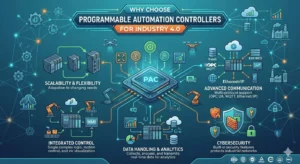
Enhanced Processing Power for Complex Control Logic
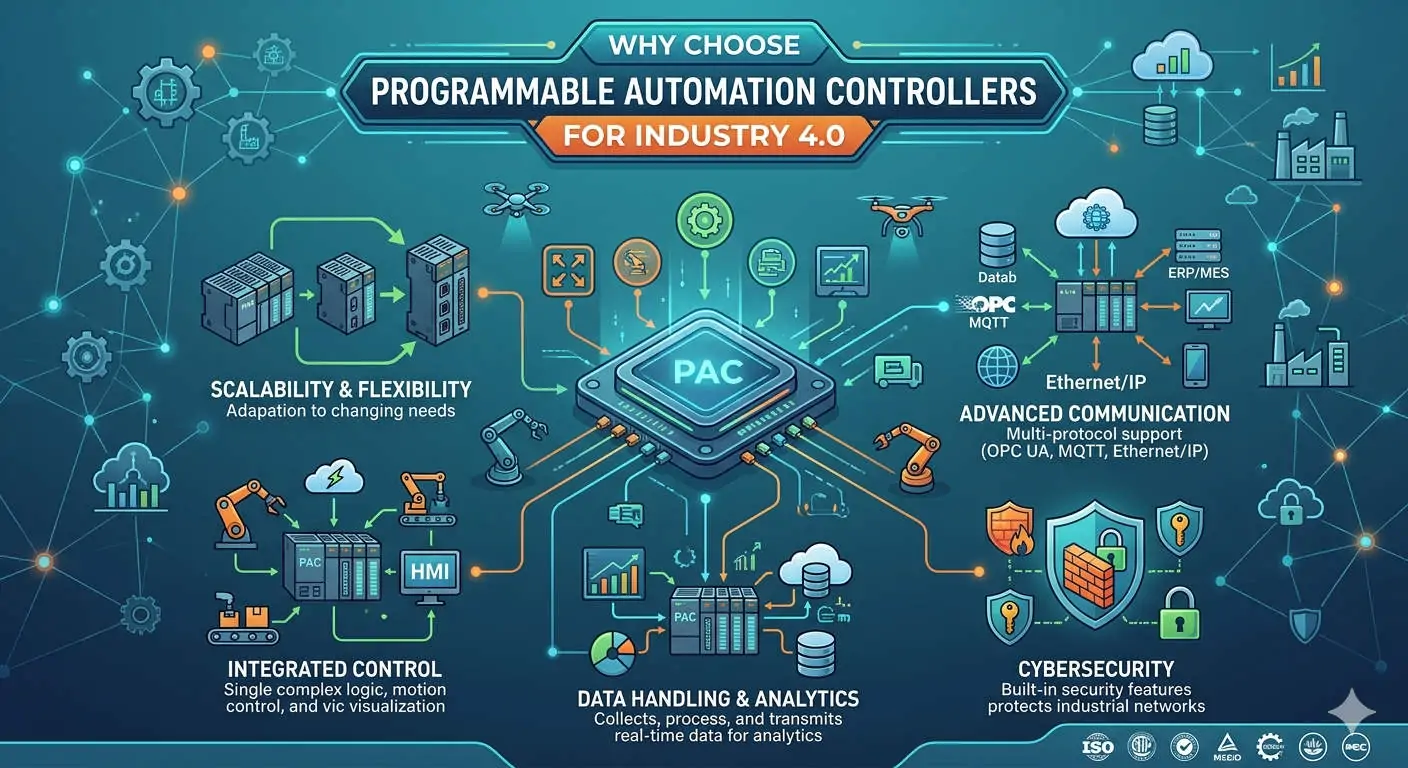
The primary advantage of a PAC lies in its multi-core processor architecture and expanded memory capacity. While standard PLCs follow a deterministic but linear scan cycle, PACs handle parallel tasks with ease. Therefore, they excel in managing complex PID loops and high-speed motion coordination. In a recent pharmaceutical filling line project, switching to a PAC reduced synchronization latency by 30%, effectively eliminating intermittent dosing errors.
Seamless IT and OT Convergence via Native Protocols
Modern industrial automation requires control systems to communicate directly with the enterprise level. PACs natively support essential protocols like OPC UA, MQTT, and EtherNet/IP. This eliminates the need for expensive third-party protocol gateways. Consequently, engineers can stream real-time production data directly to SCADA or cloud-based MES platforms. This connectivity reduces both hardware failure points and long-term engineering costs.
Modular Scalability and System Longevity
PAC systems utilize a highly modular architecture that supports distributed I/O and flexible expansion racks. This design allows manufacturers to scale their operations from single-machine skits to plant-wide systems without changing platforms. In chemical processing plants, for example, adding new reactors often only requires new I/O modules. As a result, companies avoid the massive costs associated with complete system redesigns during production expansions.
Critical Installation Standards: Noise Immunity and Power
High-speed data processing makes PACs more susceptible to electromagnetic interference (EMI) than simple controllers. To ensure stability, always implement single-point grounding and use high-quality shielded Ethernet cables. Moreover, PACs often lack built-in surge protection for their sensitive internal electronics. We strongly recommend installing external surge suppressors and a dedicated UPS. These measures prevent firmware corruption during unexpected voltage spikes or power grid fluctuations.
The Importance of Firmware Governance and Version Control
PAC environments depend heavily on complex software ecosystems. Therefore, maintaining strict version control is vital for plant uptime. Always lock project versions and back up configuration files before commissioning. I once witnessed a refinery restart delayed by six hours because of a mismatched firmware update on an I/O module. Consistent documentation prevents these costly “non-recoverable” software faults during critical maintenance windows.
PAC Implementation Checklist
- ✅ Application Assessment: Select a PAC if your project requires multi-axis motion or advanced data analytics.
- ⚙️ Protocol Verification: Confirm that the hardware supports your specific industrial protocols without hidden licensing fees.
- 🔧 Hardware Hardening: Ensure the installation environment includes industrial-grade UPS and surge protection.
- 📊 Future-Proofing: Verify that the vendor provides clear migration paths for legacy I/O modules and logic.
Expert Commentary from PLC Pioneer
“Many clients ask if they should replace every PLC with a PAC. My advice is simple: evaluate your data needs. If your system just needs to turn a motor on and off, a PLC is fine. But if you are moving toward Industry 4.0 and digital twins, the PAC is your only viable path. At PLC Pioneer, we see the PAC as the ‘intelligent edge’ that finally unites the factory floor with the boardroom.” — PLC Pioneer
Technical FAQ: Navigating the Controller Landscape
Q: Is a PAC always more expensive to maintain than a PLC?
Initially, hardware costs are higher, but PACs reduce total cost of ownership (TCO) in complex systems. They simplify the architecture by handling motion, HMI, and logic in one unit, which reduces the number of spare parts you need to stock.
Q: Can I run my existing Ladder Logic on a new PAC platform?
Most modern PACs support IEC 61131-3 standards, including Ladder Logic. However, you may need to optimize the code to take advantage of the PAC’s tag-based memory structure, which differs from the fixed-addressing used in older PLCs.
Q: How does PAC hardware handle extreme industrial temperatures?
Unlike standard PCs, industrial PACs are fanless and built with ruggedized components rated for high-vibration and high-temperature environments. They offer the stability of a PLC with the multitasking capabilities of a computer.
Solution Scenario: High-Speed Packaging Optimization
In a high-volume snack packaging facility, traditional PLCs struggled to sync weight-checkers with bag-sealing units at 200 cycles per minute. By deploying a high-performance PAC, the plant integrated the motion control and data logging into one processor. This resulted in a 12% increase in overall equipment effectiveness (OEE) and provided real-time waste tracking via an OPC UA link.
To ensure your automation project utilizes the most reliable hardware and expert technical support, visit our comprehensive catalog of industrial modules and field guides.
Find the right controller for your next project at: PLC Pioneer Limited