Optimizing Industrial Automation with 5G Wireless Distributed I/O for PLC Systems
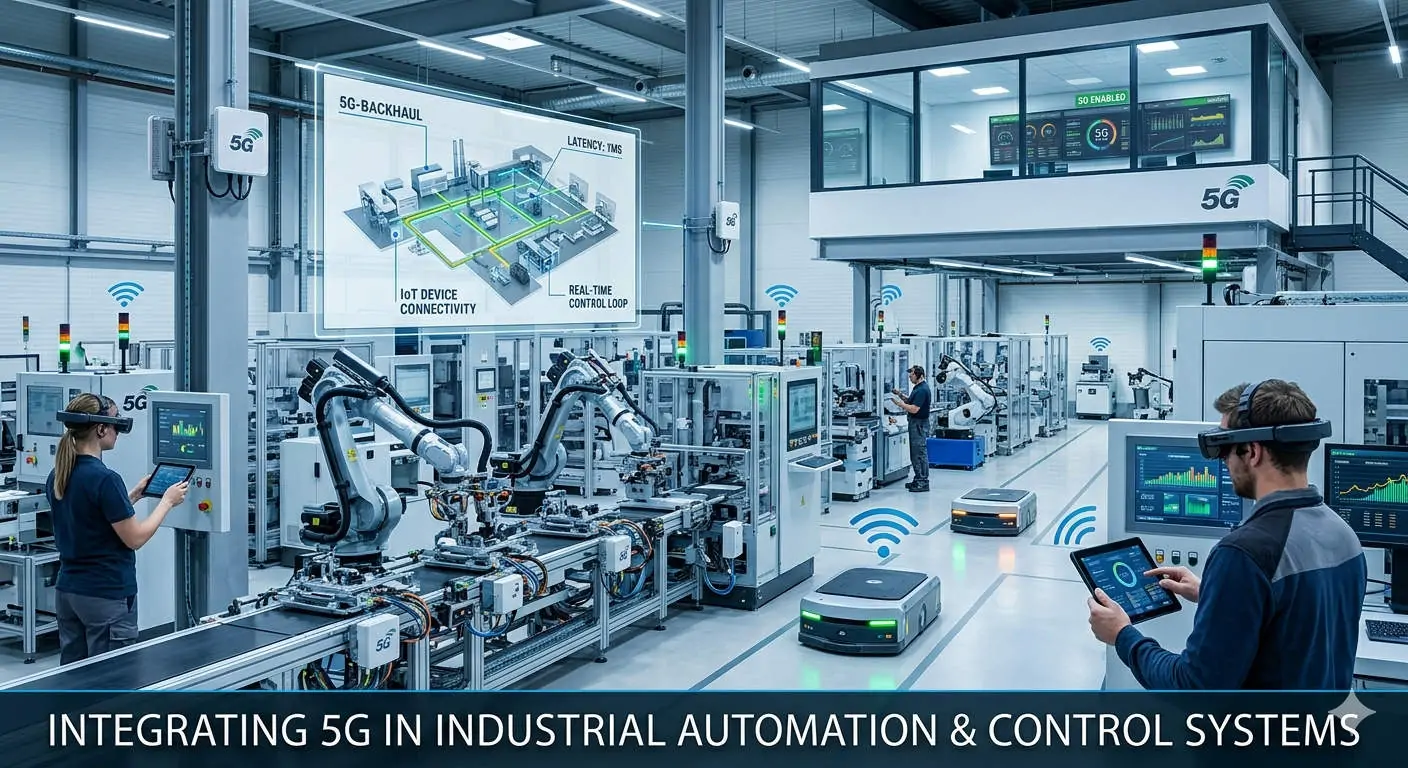
Wireless distributed I/O powered by 5G technology is currently dismantling traditional bottlenecks in industrial automation. Historically, hardwired fieldbus installations required expensive copper or fiber optic cabling. However, low-latency 5G links now offer a flexible alternative for connecting sensors and actuators to PLC systems. This innovation accelerates deployment times, particularly for brownfield upgrades and geographically dispersed industrial assets.
Strategic Advantages in Demanding Industrial Environments
In sectors like oil and gas or chemical processing, 5G significantly reduces expensive trenching and downtime. Moreover, this approach provides unmatched flexibility for mobile equipment such as Automated Guided Vehicles (AGVs) and modular skid systems. By eliminating physical cables, engineers can reconfigure production lines rapidly to meet changing market demands. Consequently, 5G acts as a catalyst for the next generation of factory automation.
The Reality of 5G Latency in PLC Communication
Latency remains the most critical metric when evaluating 5G for PLC-based distributed I/O. While wired systems like PROFINET IRT achieve sub-millisecond cycles, private 5G networks typically deliver between 5ms and 20ms. Therefore, 5G is ideal for remote diagnostics and slow control loops. However, we do not recommend it for high-speed motion control. From my experience at PLC Pioneer, 5G works perfectly for tank level monitoring but can cause jitter in fast-acting pump interlocks.
Achieving High Reliability with URLLC Architecture
Ultra-Reliable Low-Latency Communication (URLLC) targets a reliability threshold of 99.999%. Achieving this requires a standalone private 5G core rather than a public network. High packet loss can trigger PLC watchdog timeouts and lead to premature equipment wear. To mitigate risks, engineers should always implement local fallback logic at the remote I/O node. Never rely solely on a wireless link for safety-critical shutdown systems (SIL-rated) without hardware redundancy.
Protocol Compatibility and Industrial Standards
5G serves as a transport layer for various industrial protocols. Modbus TCP and OPC UA perform reliably over 5G due to their inherent tolerance for slight latency. In contrast, deterministic protocols like EtherNet/IP may experience degraded performance in real-time modes. Therefore, you must verify vendor documentation before deployment. Many PLC manufacturers have not yet officially certified wireless operation for high-speed deterministic tasks over 5G networks.
Precision Installation: Signal Planning and Interference
Industrial environments pose unique challenges for RF signals due to steel structures and rotating machinery. Consequently, performing a comprehensive site RF survey is mandatory before installation. Directional antennas help maintain signal integrity in congested areas with high EMI. Note that signal strength may fluctuate once heavy machinery begins operating. As a result, maintaining a clear line-of-sight is the best practice for stable wireless I/O performance.
Infrastructure Hardening: Power and Cybersecurity
5G edge gateways are often more sensitive than ruggedized PLC I/O modules. Always install external surge protection to prevent damage from lightning or power spikes. In outdoor plants, isolated power sources are essential for protecting communication hardware. Furthermore, use VLANs or Private APNs to isolate control traffic from general IT data. Following IEC 62443 standards ensures your converged IT/OT network remains secure against modern cyber threats.
Technical Implementation Checklist
- ✅ Latency Mapping: Verify that your control loop can tolerate a 20ms response delay.
- ⚙️ Network Choice: Prioritize Private 5G Standalone (SA) over public slices for critical I/O.
- 🔧 Safety Protocol: Use wired connections for all E-Stop and safety-interlock functions.
- 🛡️ Security Layer: Deploy industrial firewalls at the 5G gateway interface.
PLC Pioneer’s Expert Commentary
“The integration of 5G into the PLC ecosystem marks a pivot point for industrial efficiency. While it cannot yet replace the < 1ms precision of a wired backplane, it solves the ‘last mile’ connectivity problem for mobile and remote assets. In 2026, the successful engineer is the one who knows how to blend 5G flexibility with wired reliability.” — PLC Pioneer
Expert FAQ: 5G and Distributed I/O
Q: Will my legacy PLC require a gateway to communicate over 5G?
Most likely, yes. Older PLCs using serial or non-Ethernet protocols require an industrial 5G gateway to encapsulate data into Modbus TCP or OPC UA for wireless transmission.
Q: How do environmental factors like humidity or temperature affect 5G I/O?
Extreme weather usually affects the hardware housing more than the signal itself. Always use IP67-rated 5G routers and check for thermal throttling in high-temperature chemical zones.
Q: Can I run safety protocols like PROFIsafe over a 5G link?
Technically, it is possible, but most standards (like IEC 61508) require significant additional risk assessment. We generally advise keeping safety signals on dedicated wired paths to avoid nuisance trips from wireless jitter.
Application Scenario: The Rotating Kiln Upgrade
Imagine a large cement kiln where traditional slip rings for sensors constantly fail due to heat and vibration. By installing 5G wireless distributed I/O, the plant can monitor real-time temperature and vibration data without physical contact. This reduces maintenance costs by 40% and allows the PLC to adjust rotation speed dynamically based on accurate, wireless feedback.
If you need to modernize your control architecture or source specialized 5G gateways for your PLC systems, visit our resource hub for the latest hardware solutions.
Explore high-performance automation components at: PLC Pioneer Limited