The Critical Role of Watchdog Timers in PLC and DCS Security
Understanding the Watchdog Timer Mechanism
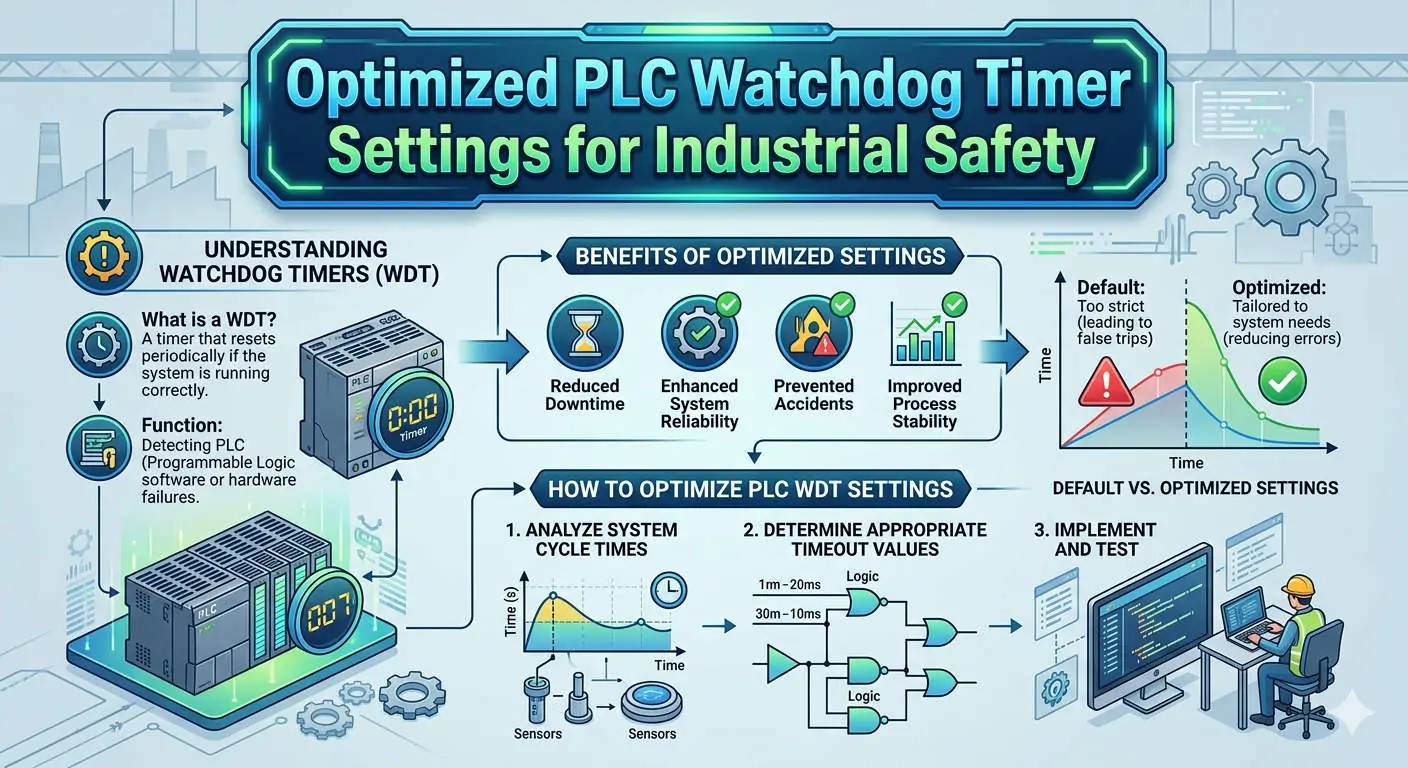
A Watchdog Timer (WDT) serves as a vital safety heartbeat for modern industrial automation. It consistently monitors whether the PLC or DCS control program executes within a predefined time window. If the logic hangs or a CPU freeze occurs, the watchdog fails to receive its “reset” signal. Consequently, the system triggers an immediate fault response to prevent unpredictable machinery behavior. PLC Pioneer observes that this hardware-level protection is the final line of defense in complex factory automation environments.
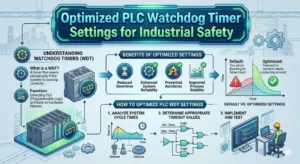
Optimizing Watchdog Thresholds for System Stability
Setting the correct timeout threshold requires a delicate balance between safety and availability. If the interval is too short, normal processing spikes might trigger nuisance trips. Conversely, excessively long intervals delay fault detection during critical failures. Industry data suggests that nearly 15% of unexpected downtime stems from poorly configured timers. Therefore, engineers should set the WDT to 1.5–3 times the maximum observed scan cycle. This margin accounts for peak communication loads without compromising control system integrity.
Leveraging Task-Level Monitoring for Precision
Modern DCS and high-end PLC units support segmented task monitoring. Global watchdogs halt the entire CPU, which is safe but often disruptive to production. However, task-level watchdogs isolate specific failures, such as a localized communication lag. This granularity allows non-affected processes to continue running safely. As an Industrial Automation Specialist, I recommend using segmented watchdogs for large-scale batch reactors to improve fault localization and minimize total system downtime.
Implementing Fail-Safe Output Strategies
The system’s reaction to a watchdog timeout defines its fail-safe posture. Most chemical and oil & gas applications follow IEC 61508 standards by de-energizing outputs (Fail-Safe OFF). However, some continuous manufacturing processes may require “Hold Last State” to prevent mechanical damage from abrupt stops. You must evaluate the specific process risks before selecting a response. At PLC Pioneer, we have found that combining watchdog logic with secondary network health checks effectively reduces accidental trips caused by minor signal jitter.
Environmental Factors and Maintenance Best Practices
Reliable watchdog performance depends on more than just software settings. Electrical noise (EMI) and power instability often cause “ghost” watchdog trips in industrial control systems. High-power Variable Frequency Drives (VFDs) can induce interference that disrupts CPU timing. To mitigate these risks, always use industrial-grade buffered power supplies and ensure strict separation between control and power wiring. Furthermore, always validate your WDT settings under full I/O and SCADA polling loads during commissioning.
- ✅ Technical Tip: Always measure the actual maximum scan time during an alarm burst.
- ⚙️ Hardware Note: Ensure surge protection is installed to prevent voltage dips from resetting the WDT.
- 🔧 Maintenance Rule: Audit watchdog event logs quarterly to identify narrowing scan time margins.
For high-quality modules and expert technical support for brands like Bently Nevada, Honeywell, and Allen-Bradley, visit the PLC Pioneer Limited official website to explore our comprehensive inventory.
Real-World Application: Chemical Batch Processing
In a recent pharmaceutical project, a PLC watchdog prevented a runaway exothermic reaction. A communication deadlock had frozen the PID control loop responsible for coolant flow. Because the task-level watchdog triggered within 200ms, the system automatically opened the emergency cooling valves. This intervention saved over $200,000 in raw materials and prevented significant equipment damage.
Frequently Asked Questions
Q: How do I distinguish between a genuine software deadlock and hardware interference?
A: Check the diagnostic buffer. If the watchdog trip coincides with a VFD start-up or a large motor engagement, it is likely EMI. Software deadlocks are usually repeatable during specific logic sequences or high data polling cycles.
Q: Should I change the default watchdog settings when upgrading from a legacy PLC?
A: Absolutely. Newer processors are faster but handle multi-threading differently. A legacy setting might be too generous for a modern CPU, leading to slower fault detection. Always re-baseline your scan times after a migration.
Q: Can a watchdog timer replace a safety relay?
A: No. While a WDT is a powerful diagnostic tool, it is a software/firmware-based function. For high-SIL (Safety Integrity Level) requirements, a hardware-based independent safety relay or a dedicated Safety PLC should be used in conjunction with the WDT.