Maximizing Precision with Dedicated High-Speed Counter (HSC) Modules
Why Standard PLC CPUs Struggle with High-Frequency Signals
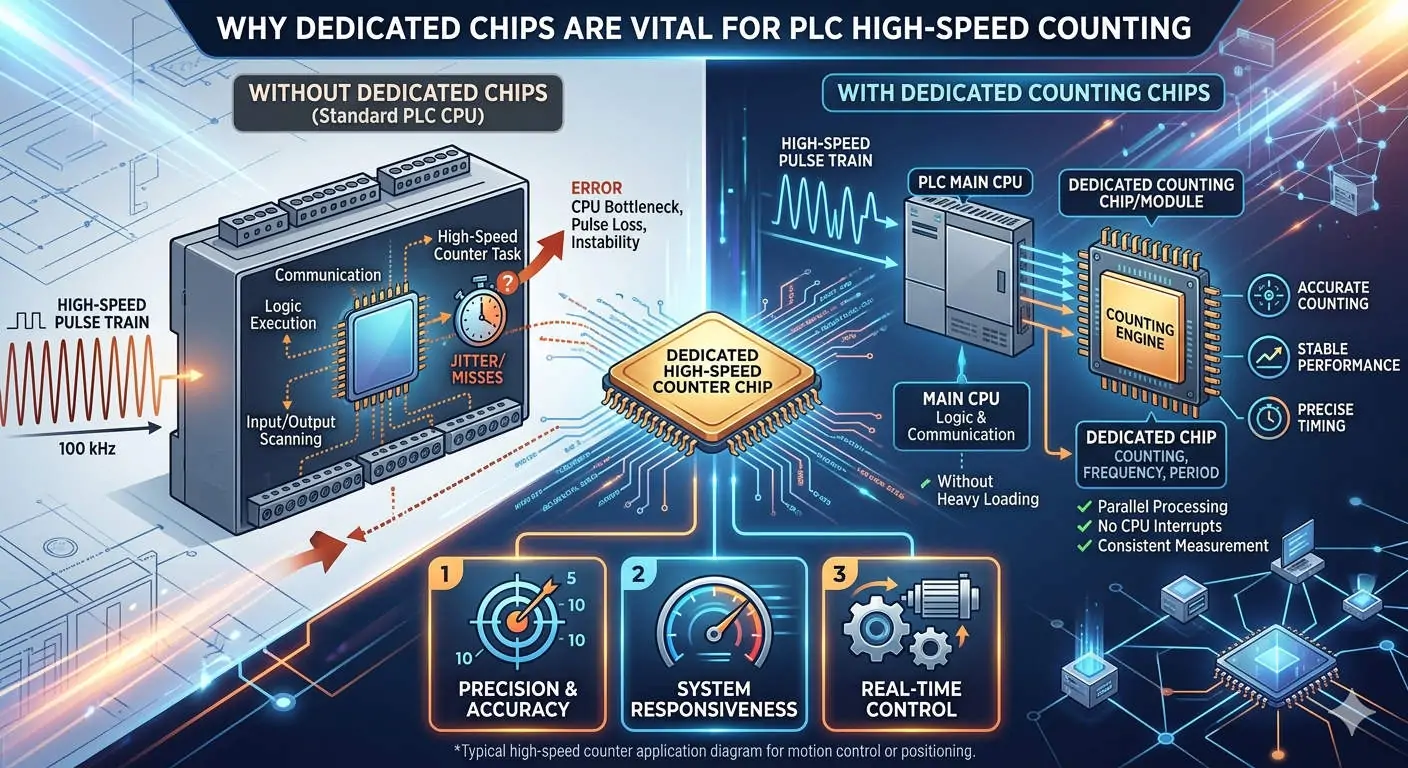
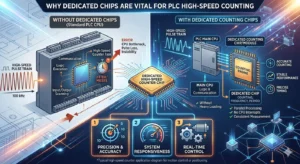
Standard PLC CPUs process data using a sequential scan cycle. While effective for general logic, this cycle often creates latency that misses fast pulses. High-speed counter (HSC) modules solve this by using dedicated signal processing chips. These chips operate independently of the main CPU scan. Consequently, they ensure real-time accuracy in demanding sectors like semiconductor manufacturing and high-speed packaging. Missing even a single pulse can lead to significant positioning errors or costly machine downtime.
The Critical Role of Maximum Counting Frequency
The maximum counting frequency defines a module’s ability to capture rapid encoder signals. Many industrial applications now require thresholds of 100 kHz to 500 kHz. From my experience at PLC Pioneer, relying on standard inputs for frequencies above 10 kHz is risky. Scan latency and interrupt limitations often cause signal loss. A dedicated chip performs hardware-level counting to maintain deterministic feedback. This precision is vital for servo positioning and synchronized motion in modern factory automation.
Enhancing Signal Integrity through Hardware Filtering
Industrial environments are notoriously noisy due to electromagnetic interference (EMI). HSC modules combat this with integrated digital filtering and debounce logic. Without these hardware-level protections, EMI often triggers “ghost pulses,” leading to overcounting. However, excessive software-based filtering can delay response times. A specialized chip offers a balanced approach. It allows engineers to configure hardware filters (typically 1 µs to 100 µs) to match specific cable lengths and encoder types.
Navigating Interface Compatibility: HTL vs. TTL
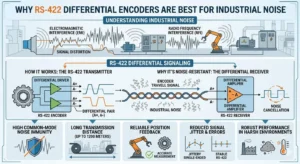
Signal interface mismatch is a frequent cause of hardware failure in the field. Most dedicated HSC chips support diverse standards, including TTL (5V), HTL (24V), and RS-422. It is essential to verify these levels before installation. For instance, connecting a 24V HTL encoder to a 5V TTL input will likely destroy the module. Using differential RS-422 signals is highly recommended for long cable runs. This method significantly improves noise immunity and ensures stable data transmission across the plant floor.
Best Practices for Shielding and Grounding
Improper grounding remains a leading cause of erratic counting in heavy manufacturing. To ensure stability, always utilize shielded twisted-pair cables for all encoder signals. I recommend grounding the shield at the control cabinet side only to prevent ground loops. Furthermore, never route high-voltage power lines parallel to sensitive signal cables. Following these physical layer standards prevents intermittent pulse loss that is otherwise difficult to troubleshoot during commissioning.
Mechanical Durability in High-Vibration Zones
In stamping or high-speed assembly, vibration can degrade electrical connections over time. Practical experience suggests using spring-clamp terminals instead of traditional screw terminals to resist loosening. Additionally, implementing proper strain relief near the module prevents physical fatigue on the wires. Periodic maintenance should include checking terminal torque and inspecting cable jackets for wear. These simple steps significantly extend the lifespan of your control system hardware.
Essential Surge Protection and Isolation Strategies
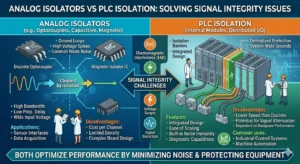
In outdoor environments or oil and gas facilities, lightning and switching surges pose a constant threat. If your HSC module lacks internal protection, you must install external signal-line surge protectors. Opting for isolated input modules is also wise when significant ground potential differences exist between devices. This extra layer of security protects your investment in high-end PLC and DCS hardware from catastrophic electrical events.
PLC Pioneer’s Expert Perspective on Industrial Counting
At PLC Pioneer, we observe an increasing shift toward decentralized high-speed processing. As machines run faster, the “bottleneck” shifts from mechanical limits to data acquisition limits. Investing in high-quality HSC modules from brands like Allen-Bradley, Honeywell, or Siemens is no longer optional; it is a baseline requirement for E-E-A-T compliant industrial designs. Always choose hardware that exceeds your current needs to allow for future speed optimizations.
Technical Highlights & Requirements
- ✅ High Frequency: Supports up to 500 kHz for high-speed motor feedback.
- ✅ Compatibility: Multi-protocol support for TTL, HTL, and RS-422 interfaces.
- ✅ Noise Rejection: Built-in configurable hardware digital filters.
- ✅ Reliability: Hardware-level counting independent of PLC scan cycles.
Typical Application Scenarios
- Packaging Lines: Precise bottle filling and labeling synchronization.
- Semiconductors: High-accuracy wafer positioning and motion control.
- Conveyor Systems: Reliable distance measurement and sorting at high speeds.
Frequently Asked Questions (FAQ)
1. How do I know if my application requires a dedicated HSC module?
If your encoder pulse rate exceeds 5 kHz or if you notice inconsistent positioning at higher speeds, a standard input is likely failing. Additionally, if your CPU load is high, a dedicated module ensures counting remains accurate regardless of scan time fluctuations.
2. Can I use a single-ended encoder for high-speed applications?
While possible for short distances, it is not recommended. Single-ended signals are highly susceptible to EMI. For high-speed precision, always prefer differential signals (like RS-422) as they provide superior noise cancellation over longer distances.
3. What is the most common mistake during HSC installation?
The most frequent error is improper shielding or mixing signal and power cables in the same conduit. This introduces noise that the HSC chip may interpret as valid pulses, leading to “drifting” errors that are hard to fix via software.
Looking for reliable automation hardware? Visit PLC Pioneer Limited for premium PLC and DCS modules tailored for high-speed performance.