Retrofitting Legacy Equipment: Bridging the Data Gap in Industrial Automation
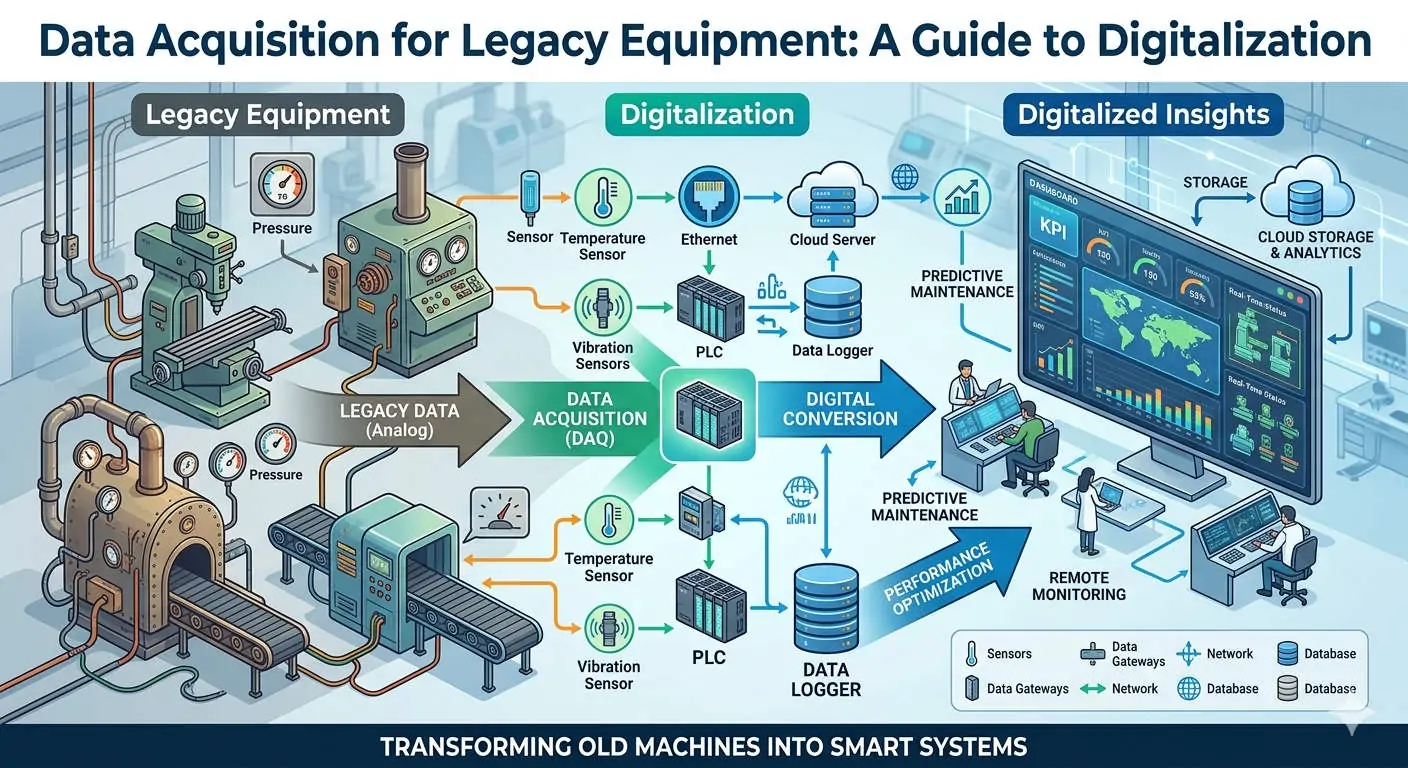
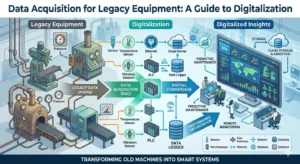
The primary hurdle in modernizing older facilities is extracting actionable data without interrupting ongoing production. Many “brownfield” assets lack native communication interfaces. However, by integrating signal acquisition modules and protocol gateways, engineers can convert raw analog signals into standardized data. This strategy allows industries like oil & gas and chemical processing to achieve digitalization without the massive capital expenditure of total equipment replacement.
High-Resolution Signal Conversion for Process Precision
Legacy machines often communicate through basic 4–20 mA or 0–10 V loops. The quality of your digitalization depends heavily on the Analog-to-Digital Converter (ADC) resolution. In my experience at PLC Pioneer, 12-bit resolution often proves insufficient for critical flow or pressure measurements. Therefore, we recommend using modules with at least 16-bit resolution to ensure data granularity. High-resolution acquisition prevents cumulative errors in control loops and reduces the risk of nuisance alarms in sensitive environments.
Choosing the Right Protocol Translator for Future Scalability
Since older hardware speaks no digital language, the gateway serves as the essential “translator.” Most automation experts prioritize a dual-stack approach to ensure long-term flexibility. Moreover, using Modbus RTU provides necessary backward compatibility with existing serial devices. For future-proofing and cybersecurity, adopting the IEC 62541 (OPC UA) standard is critical. This combination simplifies the integration of disparate assets into a unified SCADA or IIoT platform.
Mitigating Latency in Fast-Response Control Systems
Data conversion inevitably introduces latency through scanning cycles and communication processing. In high-speed environments like packaging or batching, excessive delay can lead to sequencing errors. If the total system latency exceeds 500 ms, operators may witness “ghosting” or lagging values on the HMI. Consequently, we advise performing a rigorous Factory Acceptance Test (FAT) to verify that the combined scan cycle and network delay meet the operational requirements of the process.
Combatting EMI and Grounding Issues in Harsh Environments
Older factories frequently suffer from inconsistent grounding systems. In many retrofit projects, we have observed unstable sensor readings caused by ground loops between Variable Frequency Drives (VFDs) and I/O modules. To solve this, always utilize isolated I/O modules to decouple signal paths. Additionally, replacing traditional screw terminals with spring-clamp connectors improves reliability in high-vibration areas. These small physical adjustments significantly reduce long-term maintenance costs.
Ensuring Power Stability for Continuous Monitoring
Unstable auxiliary power is a silent killer of data integrity. Brief voltage drops, or “brownouts,” often cause intermittent data loss that engineers mistakenly diagnose as software bugs. Therefore, it is vital to use industrial-grade 24 VDC power supplies with built-in redundancy. Furthermore, adding external surge suppressors compliant with IEC 61000-4-5 protects your investment from power spikes common in heavy industrial zones.
Technical Implementation & Best Practices
- ✅ Resolution Standard: Deploy 16-bit ADC modules for all critical chemical and pressure sensing applications.
- ⚙️ Signal Isolation: Use 3-way isolation (input/output/power) to prevent EMI-induced data corruption.
- 🔧 Physical Connectivity: Opt for DIN-rail mounted edge controllers to save cabinet space during retrofits.
- 📊 Protocol Alignment: Verify that your SCADA platform supports the gateway’s native driver to avoid expensive custom licensing.
PLC Pioneer’s Expert Commentary
“Many plant managers believe that digitalization requires a ‘rip-and-replace’ strategy. At PLC Pioneer, we argue the opposite. The most sustainable path to Industry 4.0 is through intelligent retrofitting. By treating your legacy machines as data sources rather than obstacles, you can unlock predictive maintenance capabilities that were previously reserved for the newest factories. The key is in the hardware layer—if your signal acquisition is flawed, your AI and cloud analytics will be too.” — PLC Pioneer
Frequently Asked Questions
Q: How can I tell if I need a simple remote I/O module or a dedicated edge controller?
If you only need to mirror a few analog signals to a SCADA system, a remote I/O module is the cost-effective choice. However, if you need to perform logic calculations or data “cleaning” before the information leaves the factory floor, an edge controller is required to handle the processing load.
Q: What is the most common mistake in legacy data integration?
Ignoring signal noise. In older plants, high-voltage cables are often run right next to low-voltage signal lines. Without proper shielding and signal isolation modules, the data reaching your SCADA will be too “noisy” to be useful for trend analysis or predictive maintenance.
: Can I integrate legacy equipment into a modern Cloud/IIoT platform?
Yes, provided you use a gateway that supports MQTT or OPC UA. These protocols are designed to traverse firewalls securely and allow your brownfield equipment to communicate directly with cloud-based analytics tools.
Solution Scenario: The Refinery Retrofit
A chemical refinery needed to monitor pressure on 30-year-old tanks without replacing the existing local gauges. By installing 16-bit isolated analog input modules and an OPC UA gateway, the facility achieved real-time visibility in their central control room within two weeks. This simple intervention prevented a potential overpressure event just three months after installation, proving the ROI of data-driven retrofitting.
If you need to unlock the hidden data within your existing machinery or require high-precision modules for your next upgrade, we are here to help. Explore our technical resources and hardware solutions to start your digitalization journey today.
Visit our official resource center for technical support: PLC Pioneer Limited