Decoding the High Value of Distributed Control Systems (DCS) in Modern Automation
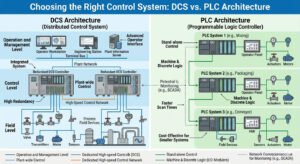
A Distributed Control System (DCS) commands a higher price point than a standard PLC for a fundamental reason. It represents a comprehensive, plant-wide architecture rather than a standalone controller. In mission-critical sectors like oil and gas or pharmaceuticals, a DCS addresses the vital need for high availability and fault tolerance. These systems manage thousands of I/O points across complex facilities with seamless centralized visibility.

Native Redundancy: Ensuring Continuous Mission-Critical Operations
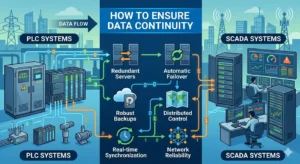
Unlike PLC-based setups that require custom integration, a DCS features built-in redundancy across CPUs, power supplies, and communication buses. This design is crucial for continuous reactor processes where a one-second failure triggers safety hazards or massive product loss. As a result, DCS platforms provide “bumpless” switchovers during hardware failures. This level of reliability ensures the process remains steady without manual intervention or engineering risks.
Deterministic Communication for Complex Control Loops
DCS platforms utilize specialized, high-speed networks to ensure predictable data timing. This deterministic nature is essential for sophisticated control strategies, such as cascade or feedforward control in distillation columns. Standard Ethernet in PLC environments may experience “jitter” or latency issues under heavy loads. However, a DCS guarantees consistent execution cycles. Therefore, manufacturers see improved product quality and significantly reduced process oscillations.
Unified Engineering and Lifecycle Management Efficiency
One of the strongest arguments for a DCS is its integrated software environment. Engineers manage configuration, historical data, and asset diagnostics within a single, unified database. This eliminates the “tag inconsistency” common in mixed PLC and SCADA vendor setups. Consequently, centralized management reduces commissioning time and prevents version mismatches. It also streamlines long-term maintenance by providing a single source of truth for the entire plant.
Strategic Installation: Managing Heat and Signal Integrity
Proper cabinet layout is a frequently overlooked aspect of DCS deployment. Because these cabinets are often densely packed, overheating becomes a primary cause of intermittent faults. Engineers must prioritize ventilation and separate redundant network paths to eliminate single points of failure. Furthermore, signal noise in large-scale I/O environments requires strict adherence to single-point grounding. In chemical plants with high-power motors, poor shielding often leads to inaccurate analog readings.
Protecting Assets with Robust Surge Suppression
Field signals in outdoor installations, such as tank farms, are highly vulnerable to lightning and electrical transients. While some believe internal module protection is sufficient, PLC Pioneer recommends adding external Surge Protection Devices (SPD). Replacing a damaged DCS I/O card is far more expensive than the cost of a PLC equivalent. Implementing external protection is a small investment that prevents catastrophic hardware failure during storm seasons.
Technical Implementation & Best Practices
- ✅ Verify Redundancy Paths: Always physically separate primary and secondary network cables to prevent simultaneous damage.
- ⚙️ Prioritize Grounding: Implement a dedicated instrument ground (clean earth) separate from the protective power ground.
- 🔧 Environmental Control: Use temperature sensors inside DCS cabinets to trigger early warning alarms before hardware limits are reached.
- 📊 Tag Management: Leverage the global database feature of the DCS to ensure HMI and Controller tags remain synchronized.
PLC Pioneer’s Expert Perspective
“In the world of industrial automation, the price of a DCS is often mistaken for a hardware premium. In reality, you are purchasing risk mitigation. When downtime costs exceed $10,000 per minute, the ‘expensive’ DCS becomes the most cost-effective insurance policy a plant manager can buy. My advice? Don’t force a PLC into a DCS-sized hole just to save on the initial CAPEX; the OPEX will eventually haunt you.” — PLC Pioneer
Frequently Asked Questions (FAQ)
Q: How do I justify the ROI of a DCS to stakeholders?
Focus on the ‘Cost of Unplanned Downtime.’ While a PLC setup is cheaper upfront, the engineering labor required to build DCS-level redundancy and the potential for process interruptions often make the DCS cheaper over a 10-year lifecycle.
Q: Can I mix different brands of I/O with my existing DCS?
Technically yes, via Profibus or Modbus TCP, but you lose the integrated diagnostics that make a DCS valuable. For the best experience, stick to the vendor’s native I/O to ensure the asset management software can ‘see’ the health of every sensor.
Q: What is the biggest risk during a DCS migration or upgrade?
The database conversion is the most dangerous phase. Many legacy HMIs and historians have custom-written scripts that don’t translate directly to modern platforms. Always insist on a comprehensive simulation or ‘digital twin’ test before the actual cutover.
Solution Scenario: Chemical Batch Processing
A mid-sized chemical plant transitioned from multiple independent PLCs to a centralized DCS. Previously, communication gaps between the mixer and the heater caused batch inconsistencies. After the DCS implementation, the plant achieved synchronized loop control and automated report generation. This change reduced raw material waste by 12% and provided full traceability for regulatory compliance.
If you are planning a system migration or need high-reliability components for your next project, explore our extensive inventory of premium automation hardware.
Discover more technical insights and hardware solutions at: PLC Pioneer Limited